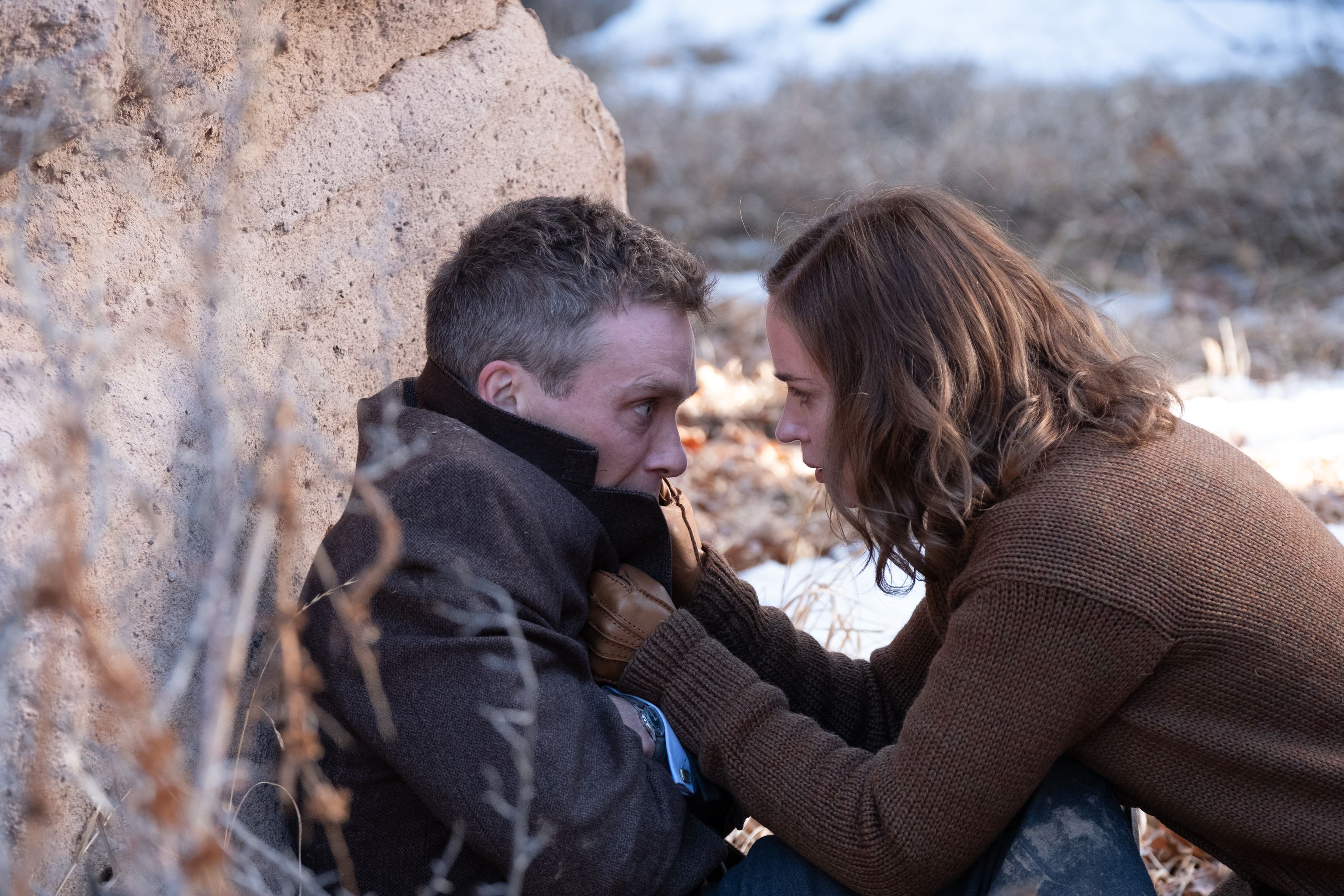
As Kitty Oppenheimer, Emily Blunt gets to don some high-class fashion, a perfect Transatlantic accent, and utter the best line in Christopher Nolan’s magnificently executed 3-hour biopic of the father of the atomic bomb.
It’s at a crucial inflection point in the film when Nolan’s screenplay is doing some intense narrative gymnastics to draw parallels to the consequences of an affair Robert (Cillian Murphy) has with a femme-fatale-ish Florence Pugh and the consequences of his direction of the Manhattan Project at Los Alamos. Blunt delivers the line in such a bluntly brilliant way, I almost bought it. It’s a beautiful little atomic bomb of emotion and conceit layered into a film that has multiple climaxes and interwoven story arcs that feast upon multiple egos, mysteries, and one damning legacy that haunts and drives geopolitics to this day.
To say Nolan’s film is jam-packed and has everything is to put it lightly. The cast is A-list to an almost fault, with just about everyone doing perfect accents, donning spectacular aging make-up, and killing their key pieces of dialogue. They are uniformly memorable, and it’s impossible to pick a standout because they all do.
From a technical stand point, it’s astounding to experience the weaving and intersplicing of timelines, visuals, sound effects, voices and music that foreshadow and build up to at least three jaw-dropping cinematic crescendos:
- The nerve-shattering suspense leading up to the Trinity test. This was flawlessly and imaginatively executed. You really felt like you were there witnessing the first atomic bomb going off.
- Oppenheimer’s celebratory “end of the war” speech at Los Alamos where he horrifically begins to imagine the carnage the bombs created. This is a monumental achievement of getting inside a person’s head with sound and visuals.
- The big reveal. Nolan weaves a mystery about what was said during an exchange between Einstein and Oppenheimer throughout the film. Speculation on what was said is the primary cause of Robert Downey Jr.’s character’s vindictiveness that tries to bring Oppenheimer down after the war. But when we learn in the closing scene what was (actually?) said, it’s a damning indictment of past and current affairs. The weight of what Oppenheimer and his team did hangs as heavy as a nuclear arsenal around our collective necks.
And it’s in that closing moment Nolan brings us elliptically back to that moment earlier where Kitty tells Robert straight, “You don’t get to commit the sin and get us to feel sorry for you because it has consequences.”
Oppenheimer is a rousingly cynical, wildly entertaining, and depressing-as-hell masterpiece.
 The Schleicher Spin
This was a masterpiece. I really hope this gets Nolan a long overdue Best Director Oscar. The sound design alone was amazing. The way he kept inserting the sound of the feet stomping on the gym bleachers before ultimately revealing the source of that sound was incredible. I also read somewhere that this is the first biopic where no composite characters were used. Every character in the film actually existed. Yet another tip of the cap to Mr. Nolan and the meticulous nature in which he makes his films.
Yes! The feet stomping – oh my god!!!
And the Trinity Test – how he made you think he would show it so loudly – and he did up to a point – and then bang – just the heavy breathing.
The sound design was a character unto itself.
This has to be the Oscar front runner for EVERYTHING right now. (Though, god, I still love Past Lives something fierce.)
I’m still astonished by the huge success this Nolan’s brillant achievement has provoked. This is not an easy film, with so much historical points to put together just like some quantic reaction.
The main points you mentioned here are some of them. It was a challenge, and Nolan’s made it.
It really was astonishing the scale of it all. Just like the Manhattan Project itself. And the unending aftermath.