What if? It’s arguably the most powerful question in a writer’s toolbox. Oh, what wonderful worlds they can build by asking it. Author Maggie O’Farrell asked, “What if…Hamlet was a key part of Shakespeare’s processing his grief over the death of his eleven-year-old son Hamnet?” It’s not that far of a stretch. After all, Shakespeare’s words continue to connect with audiences over four-hundred years later. Did he not pour his heart and soul…and grief…into it?
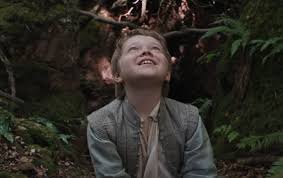
Award-winning director Chloe Zhao brilliantly brings O’Farrell’s big “What if?” and both O’Farrell’s and Shakespeare’s words to life in one of the finest literary film adaptations I have ever experienced. Zhao’s visualization of Shakespeare’s Stratford, where young Will (Paul Mescal) woos and weds the mysterious Agnes, a quiet force of nature who can see things just by holding your hand played with exquisite care and bold expressiveness by the incomparable Jessie Buckley, is meticulous and earthy where the houses and the fields and the woods are imbued with brilliant light and little domestic details to give both an ethereal and lived-in feel. The textures Zhao creates with the fauna, the architecture, and the costumes are astounding. We watch as Will becomes Shakespeare, and as Agnes becomes a strong and loving mother to three children (including twins – Hamnet and Judith). Then, the plague takes their dear Hamnet from them in the most heart-wrenching sequences of losing a child you can imagine. The married couple become predictably estranged, both in how they handle their emotions differently and by physical distance while his career continues to blossom in London. But there are thorns there in his work.
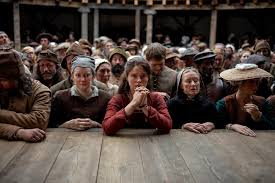
Meanwhile, Zhao’s choice in how to adapt the narrative takes O’Farrell’s non-linear structure and makes it a clean line arcing forever forward into caves and undiscovered countries. What Zhao cleverly plays with (turning the novel’s episode on the origins of the plague into a haunting shadow puppet show) and decides to leave out (the bombastic ghastliness of London bridge) help fine-tune the intimacy of the horrors and the emotion of Agnes’ climactic trip to The Globe to see what play her husband hath wrought in the wake of their greatest personal tragedy. It is there in the legendary Globe Theater where we are a held spellbound by Zhao’s framing, by Buckley’s reactions, by a fatherly ghost played by Shakespeare himself, by our Hamlet (played by the real-life older brother of the child actor who plays Hamnet), and by an amazing cast of extras standing in for us that will move you like only the most deeply felt films and moments do. These artists bring Shakespeare’s words to bold new life…and what if…what if not only those words, but the players who spoke them, the audience who felt them…what if they brought back Agnes’ dear Hamnet, too?
Yes, an assuredly beloved little boy really died over four-hundred years ago. And he was brought back to life in this novel and in this film. But perhaps Hamnet did not die…not really. What if…his spirit lives on? Like the greatest of art does. Hamnet, the novel and the film, is a beautiful work of art for the ages.
For more on the making of the film, I recommend reading this article:
 The Schleicher Spin
Beautiful! I loved the book and look forward to seeing the film!
I hope you love the film, too. It really does the book justice.