Netflix’s miniseries adaptation of John Steinbeck’s East of Eden is a poetic and ponderous thing.
It’s relatively faithful to the source material while still adapting to a streaming visual form and adding a more modern psychological context. The sequence of episodes is more streamlined compared to the text, but most of the key events and players are there, spare for the sprawling Hamilton clan who are only represented by their patriarch on screen.
From a technical standpoint, the series is sumptuous and enthralling. The directing, cinematography, costumes, set designs, and music score from Laura Karpman are first class and completely immersive. Zoe Kazan’s screenplay honors the source material while adding some nuance (specifically to Cathy Ames’ backstory and motivation), yet it also gets bogged down by the biblical illusions, references, and timshel, which I found the least interesting features of the novel and come across as overwrought on screen. In the novel, there was at least a bit of a wink and a nod from the clever omniscient narrator, but that narrator is not present in the series, though Cathy, and later Charles Trask, get to haunt portions with creeping voice-overs.
The series also suffers from the imprisoning misogyny of the novel, though its pall over the narrative is part of what makes it so ripe for debate to this day. There’s also an irony in its theme of timshel and free will, because as much as Kazan’s script tries, the characters never feel like fully fledged humans, and act only as elaborate and pretty pawns in the didactic lesson Steinbeck wants to deliver and Kazan obliges despite her modernized take.
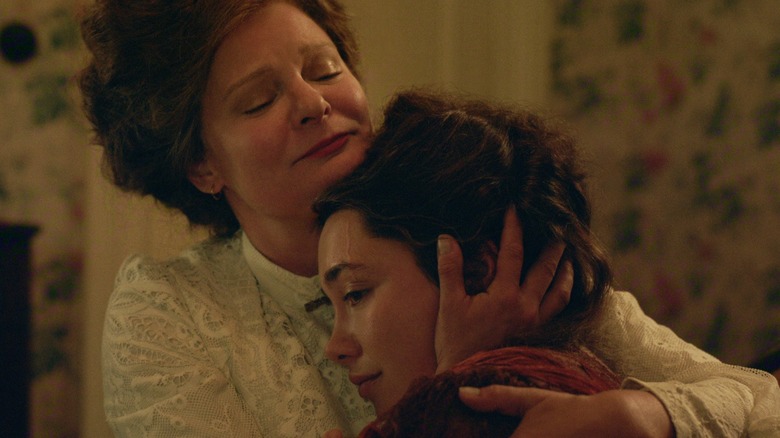
The performances are all over the map, with Florence Pugh standing tall (ironic given her sleight height) as Cathy/Kate. Hers is a tour de force. Martha Plimpton makes for a perfect Faye, and episode four, which plays out her fate with Kate with nary a boring man in sight is the peak of the series and one of the finest stand-alone hours or streaming television since the heyday of The Sopranos and Mad Men, two other misogynist tracks that also benefited greatly when they peered more deeply into the supposed fairer sex for an hour here or there. Meanwhile, for moral support, Hoon Lee as Lee and Ciaran Hinds as the elder Hamilton are also standouts. I suppose Mike Faist as Charles Trask and the revolving door of kids and young adults who play two sets of brothers at different ages are all fine, but Christopher Abbott as Adam Trask is like a piece of wet cardboard. He alone, as a character and an actor, almost ruins the entire thing. I hated him.
All that being said, and mine being just my opinion, East of Eden as an epic family saga remains ripe for debate and interpretation, and the miniseries, with all its faults and triumphs, reminds us how fertile and frustrating great literature put to screen can be.

