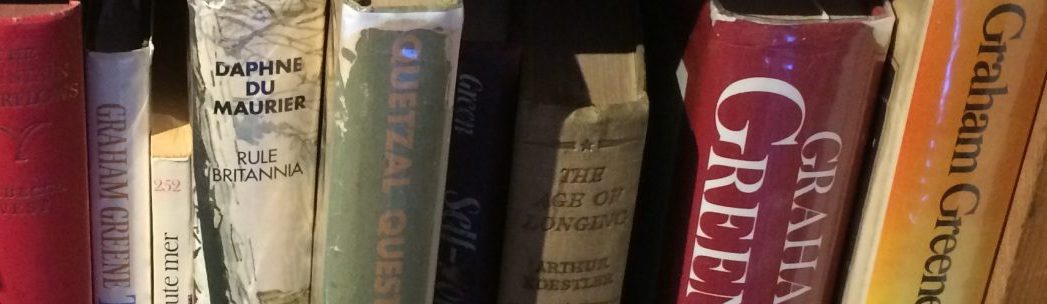
I’ve been trying to read more non-fiction in 2026, and here are two recent 5-star reads.
First up was a long-awaited and highly regarded deep dive on one of my favorite writers of all-time.
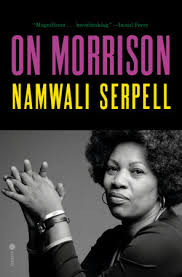
On Morrison by Namwali Serpell is erudite, magnificent, masterfully presented, provocative, probing, academic yet accessible, and simply the best. Warning: do not go in as a Toni Morrison novice. Serpell’s plunges into each of Morrison’s major works will make you love even more the ones you loved (Jazz, A Mercy), shine new light on the ones you were challenged by (The Bluest Eye, Song of Solomon, Paradise), and make you want to devour those you have not yet experienced (Sula).
Amongst the exploration of Morrison’s works is Serpell’s study of how Morrison used shade, signifying, and giving something or someone “a read” as an editor, critic, and in her own works. It’s a fascinating way to color one’s reading of Morrison, or anyone of such literary weight, really. Serpell also shares her thoughts on Morrison’s legacy, complete with an anecdote about glimpsing Morrison’s personal letters that Princeton put on display for a limited time following her death. Serpell then poignantly closes the book by reminding us of Morrison’s metaphor for the act of creation and writing as a kind of “flooding” which was especially powerful to me as both a reader and a writer.
Reading On Morrison is like attending the most fascinating university literature course you never took, taught by the most interesting professor you never had, on the topic of one of the greatest American writers that ever was.
Next up is a timely and sobering look at Palestine from the POV of a researcher interviewing everyday Palestinians over the course of decades.
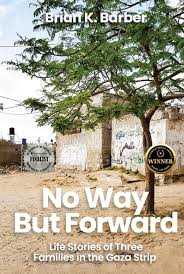
No Way but Forward: Life Stories of Three Families in the Gaza Strip by professor Brian K. Barber is an astounding account of the brutality of the ongoing war in Palestine. It’s both meticulously researched and starkly human.
Barber opens the book with a history lesson on Palestine and the continuous conflict there. He then introduces the reader one by one to his three subjects, three Palestinian men whose families he has interviewed and followed over the course of many years in his tireless research and work. We meet these men as young children and then follow them growing up and becoming husbands and fathers and teachers and experts in their fields. Barber captures the startling everydayness of their lives that just happen to be interspliced with one of the most brutal occupations in modern history. They say true evil revels in the banality of life, and the constant harassment and oppression, much of it cruel an arbitrary, marks the lives of these men and those around them. It’s astounding they all contain the fortitude to carry on, get educated, grow careers and families.
Following these three sections, Barber then shares ongoing WhatsApp messages he carries on with the three men between October 7th 2023 and October 7th 2024. The utter and senseless destruction, with still no end in sight, is captured in these raw and real interactions. I was floored by both the horrors endured (and still continuing) and the humanity of the innocent Palestinian people that still somehow, in spite of it all, shines through.

